You picture sunlight pouring through tall windows, brick under your fingertips, and the city at your doorstep. Loft living in downtown Minneapolis can deliver all of that, along with a few practical trade-offs to plan around. If you’re drawn to character, culture, and convenience, this guide shows you what life actually feels like in a Minneapolis loft, what to expect from buildings and floor plans, and how to shop smart. Let’s dive in.
Where lofts cluster in Minneapolis
Downtown Minneapolis lofts show up in two main forms: historic warehouse conversions and newer loft-style condos that echo industrial design. You’ll find both within a few connected neighborhoods.
North Loop and Warehouse District
This is the epicenter for classic warehouse conversions. You get exposed brick, timber beams, large multi-pane windows, and sidewalk-level energy. Restaurants, bars, and coffee shops cluster on walkable blocks, and you are a short walk to the river and the downtown core. Expect a lively street scene, especially on weekends.
Mill District and the Riverfront
Along the riverfront, historic milling buildings sit near cultural anchors like museums and performance venues. The area feels scenic and connected to the trails, with long river walks and views that change by season. Many buildings here blend history with modern finishes, and some units capture striking river or city panoramas.
Downtown Core and Nicollet Mall
In the central business district, you’ll see more modern towers and mixed-use buildings. Transit is strong, daily needs are close, and you can move easily between offices, shopping, and dining. Loft-style condos in this area aim for industrial touches with contemporary systems and building amenities.
Downtown East and Stadium Area
If you love live events, this area offers convenience to major venues. You can walk to games and concerts, which is a perk. On event nights, plan for more foot traffic, higher parking demand, and louder streets.
What “loft” means here
Downtown lofts fall into two broad categories. Each offers a distinct feel.
Historic warehouse conversions
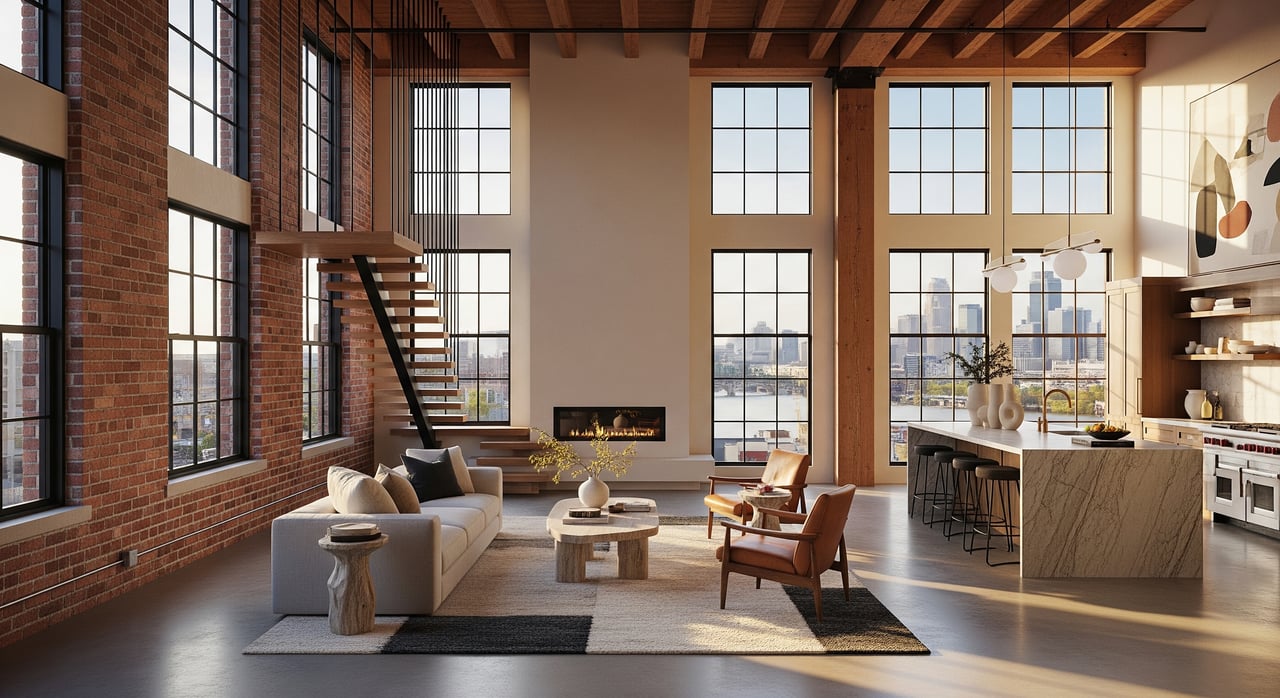
True lofts come from converted warehouses, mills, or commercial buildings. You’ll often see exposed brick, timber or steel columns, visible ductwork, concrete or hardwood floors, and high ceilings that can run 10 to 16 feet. Floor plans tend to be open, which delivers a sense of volume and light.
Newer loft-style condos
Newer buildings borrow the industrial look with tall windows and high ceilings, but they benefit from modern insulation, building systems, and full amenity packages. If you love the vibe but want newer mechanicals and energy efficiency, this path may fit you better.
Common layouts and how they live
Loft layouts vary widely, but a few patterns repeat.
- Studios and open one-bedrooms. An airy, single volume that combines kitchen, dining, and living. Sleeping areas may be open or tucked into a corner with partial walls.
- One to two bedrooms. Open-plan living with one enclosed bedroom or a mezzanine above. Some buildings offer two levels connected by a staircase.
- Larger lofts and penthouses. These are less common, with bigger footprints and more defined rooms. They often trade walls for wider living spaces and dramatic views.
Natural light and windows. Big windows are a signature. They bring in light and frame river or skyline views. In older buildings, single-pane windows can be draftier than modern glazing, so it helps to check whether windows have been upgraded.
Open plan vs. storage. Open layouts feel spacious but sometimes come with fewer closets. Many owners add built-ins, wardrobes, or use off-site storage to keep the space clean and minimal.
Mezzanines and privacy. Mezzanine bedrooms look great and use vertical space well. They also allow sound and light to travel. If you prioritize quiet and separation, you may favor an enclosed bedroom and a layout with better sound control.
The day-to-day lifestyle
What happens between the photos? Here’s how loft life unfolds.
Morning
You wake to soft light through tall windows and head down to a local coffee shop within a short walk. If you commute, transit options are close at hand in the core, and many blocks connect easily to buses and light rail. If your building has a fitness room or rooftop deck, an early workout or a sunrise view is a nice routine.
Midday and evening
Downtown feels active with restaurants, galleries, and patios. North Loop and the Warehouse District are especially good for a quick lunch or a dinner spot within a few blocks. Cultural venues near the riverfront make it easy to catch a show or stroll along the trails.
Event nights
If you live near major venues, expect larger crowds, more traffic, and a busy vibe on game and concert nights. It’s a perk if you enjoy events and a trade-off if you want quiet. Buildings with better window upgrades and thicker construction help keep things calm inside.
Sound and building acoustics
Historic conversions deliver character but also more hard surfaces, which can amplify sound. Look for listings that mention window upgrades, sound insulation, or recent building improvements if quiet is a priority. Mezzanine bedrooms and open floor plates can spread sound within the unit as well, so consider how you live, work, and sleep when you tour.
Transit, walkability, and getting around
Downtown Minneapolis is a multimodal hub. You can connect to light rail, an extensive bus network, and commuter rail at central stations. Walkability is one of downtown’s strengths, with daily needs, coffee, dining, and offices often close by. Biking is common, with lanes and bike storage in many buildings. In winter, plan for snow and consider how your routes are maintained.
Driving and parking vary by block and building. Many lofts include deeded or rentable parking. Public ramps and on-street options are common, but costs and availability change with location and time.
Four-season comfort
Minneapolis winters are cold and snowy. In older brick-and-timber buildings, heating comfort depends on the windows, the HVAC system, and how the conversion was done. Some buildings rely on in-unit systems, while others use buildingwide boiler or cooling systems. In summer, large windows and masonry can hold heat, so efficient air conditioning is important. When you tour, notice draft control, how quickly rooms heat or cool, and whether shades help manage afternoon sun.
Amenities you’ll see
Loft buildings span a range of amenities. Common features include secure entry or concierge, fitness rooms, rooftop decks, package lockers, bike storage, pet areas or dog-wash stations, and resident lounges. Historic conversions may offer a tighter amenity set unless they’ve been upgraded. Newer loft-style developments often mirror luxury condo packages with more robust common spaces.
Costs, financing, and what to review
Beyond your purchase price or rent, plan for monthly and long-term costs.
- HOA or condo dues. These cover building operations, maintenance, amenities, and common insurance. Dues vary by building and amenity level.
- Special assessments. Older conversions can require capital improvements. Review past and potential assessments as part of your due diligence.
- Utilities and parking. Some utilities are metered individually. Parking may be deeded, assigned, or rented. Ask for typical monthly costs.
- Lending and insurance. Unique floor plans or converted buildings can trigger extra lender review or project approvals. Insurance needs may differ for historic conversions. Work with your lender and insurance agent early.
When you are serious about a building, request the full set of association documents and studies. This should include rules, budgets, reserve studies, and any engineering or capital improvement plans. Pay special attention to building systems like roofs, windows, elevators, plumbing, and waterproofing, along with timelines for replacements.
Storage and daily function
Open layouts invite streamlined living, but storage can be minimal. Plan smart solutions:
- Add wardrobes, built-in cabinetry, or a wall of shelving.
- Choose furniture that hides clutter, like storage beds or benches.
- Consider off-site or building storage units if available.
- Map your entry drop zone, bike storage plan, and pet gear so the main living volume stays clear.
Resale and rental outlook
True industrial lofts have strong appeal for buyers who value character and light. Resale potential hinges on location, views, natural light, condition, and the amenity package. Rental demand tends to be healthy downtown, with cycles that mirror the broader urban rental market. If you are buying with investment in mind, look at association rental policies, minimum lease terms, and any caps.
Trade-offs vs. traditional condos
Every housing type comes with choices. Here are the key differences you’ll weigh.
- Character and volume vs. privacy. High ceilings, brick, and open plans feel special, but they are not as private or quiet as enclosed layouts.
- Historic fabric vs. modern systems. Conversions offer irreplaceable materials and textures. Newer loft-style condos deliver contemporary insulation, glazing, and HVAC.
- Open plan vs. storage. Fewer closets and walls require furniture planning or added built-ins.
- Urban energy vs. calm streets. Proximity to dining and events is a plus. Expect more activity, especially on weekends and event nights.
How to tour like a pro
Use your tours to answer the daily-life questions photos cannot solve.
- Visit at different times. Tour on a weekday morning, a weekend evening, and an event night if you are near a venue.
- Test for sound and comfort. Close doors, listen for hallway noise, and stand by windows to feel for drafts.
- Check light and layout. Note where the sun hits, how you’d place furniture, and whether a mezzanine fits your lifestyle.
- Review building systems. Ask about recent upgrades to roofs, windows, elevators, and waterproofing.
- Read the documents. Review reserves, budgets, and any engineering reports before you sign.
Ready to see what fits your style and budget? If you want curated options, off-market access, and clear guidance on HOA details, connect with Isaac Kuehn for a personalized downtown loft game plan and get your free Minneapolis Condo & Loft Guide.
FAQs
What is the difference between a historic loft and a loft-style condo in Minneapolis?
- Historic lofts are warehouse or mill conversions with exposed brick, beams, and open floor plates, while loft-style condos are newer buildings that mimic the look but feature modern building systems and amenities.
How noisy is loft living near downtown venues on event nights?
- Expect higher pedestrian and vehicle traffic, busier streets, and more ambient noise on game and concert nights; upgraded windows and building insulation can reduce indoor impact.
Are mezzanine bedrooms private and quiet in Minneapolis lofts?
- Mezzanines feel airy and dramatic but allow sound and light to travel, so enclosed bedrooms offer better separation if privacy is a priority.
How do Minneapolis winters affect comfort in older loft conversions?
- Comfort depends on window quality and HVAC; older single-pane windows can be draftier, so window upgrades and efficient heating systems matter for winter performance.
What should I review in HOA documents for a downtown Minneapolis loft?
- Look for budgets, reserve studies, rules, and any engineering or capital plans addressing roofs, windows, elevators, plumbing, waterproofing, and potential assessments.
What parking options are typical for downtown Minneapolis lofts?
- Many buildings offer deeded or rentable parking, with public ramps and on-street options nearby; availability and costs vary by building and block.