Trying to choose between a Bloomington townhome and a condo? If you want low maintenance and quick access to Minneapolis–Saint Paul International Airport, the right fit can make daily life easier and your budget more predictable. This guide breaks down how each option affects your lifestyle, monthly costs, and long-term ownership responsibilities in Bloomington.
You’ll learn how ownership type changes what you insure and maintain, what to look for in HOA documents, and how to evaluate noise, transit, and parking near MSP and the Mall of America. Let’s dive in.
Bloomington snapshot for condo and townhome buyers
Bloomington is a major employment and retail hub with MSP, Mall of America, and several corporate campuses nearby. Many condo and townhome communities sit close to transit, shopping, and major roads like I-494 and I-35W. That mix draws frequent travelers, airport employees, and commuters who want convenience and lower-maintenance living.
If you value quick airport access, look at locations near the Metro Blue Line and Mall of America. If you are sensitive to sound, evaluate building construction, window quality, and local noise maps before you buy. It helps to walk the area at different times of day and ask about community noise rules.
Legal ownership: what you actually own
Condos: unit plus common elements
With a condo, you typically own the interior space of your unit and share an undivided interest in the common elements, such as hallways, exterior walls, roofs, and grounds. A condominium association manages those common elements, enforces rules, collects dues, and levies assessments.
Townhomes: fee-simple or condo structure
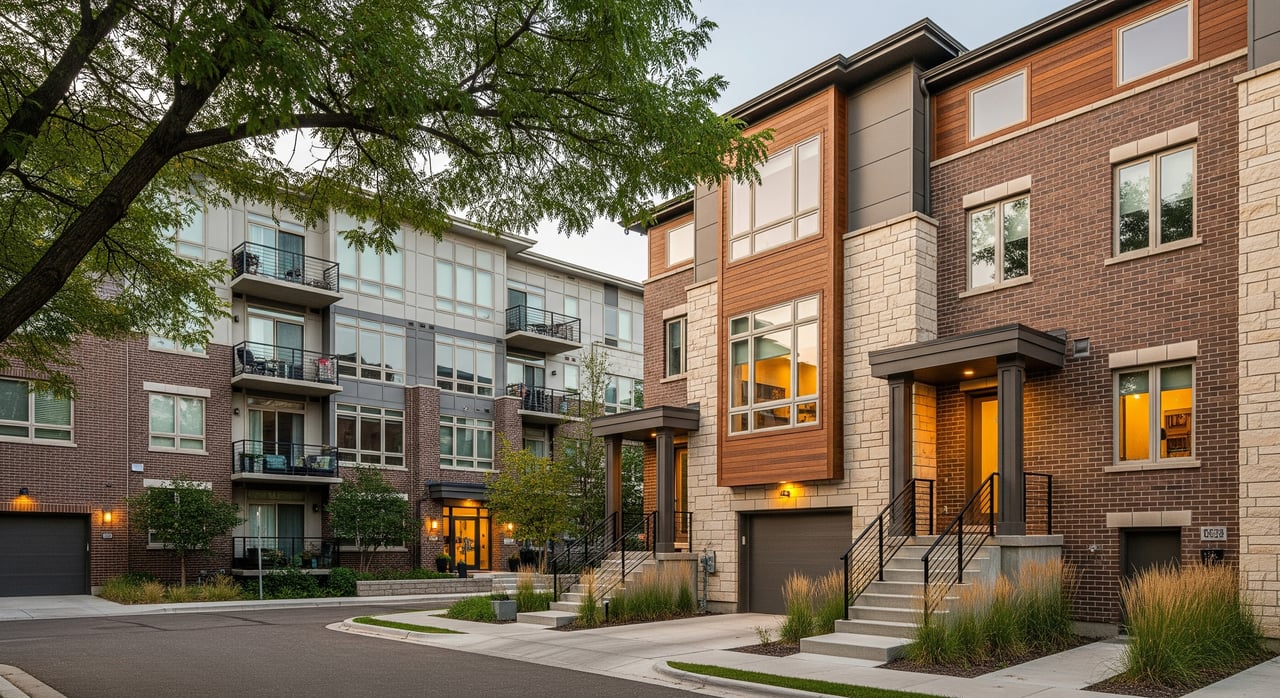
Townhome describes a building style, not a single legal setup. In Bloomington, a townhome can be legally structured two ways:
- As a condominium, where the association handles exteriors similar to a typical condo.
- As fee-simple, where you own the unit plus the land beneath it. In fee-simple communities, owners often handle exterior maintenance and the roof, while the HOA manages shared landscaping, roads, and any amenities.
Because responsibilities vary by community, always read the governing documents to confirm whether the townhome is fee-simple or a condo and what you personally maintain and insure.
Minnesota rules and Hennepin County taxes
Minnesota’s common-interest community laws set standards for how associations operate, assess dues, and disclose information to buyers. Your rights and responsibilities come from both state law and the association’s declarations, bylaws, and rules. Property taxes and homestead classification are handled by Hennepin County. Homestead status can reduce taxes on your primary residence, so plan your budget with that in mind.
HOA duties and how they shape daily life
Maintenance and services
- Condos: Associations typically cover exterior maintenance, roofing, landscaping, snow removal, building insurance on common elements, and shared amenities. You usually handle interior repairs and finishes.
- Townhomes: In fee-simple setups, owners often handle the exterior and roof, so dues can be lower but out-of-pocket maintenance is higher. Townhomes structured as condos may mirror typical condo coverage. Always confirm what the HOA covers.
Reserve funds and special assessments
Your dues fund daily operations and long-term reserves for big-ticket items like roof replacement, exterior painting, and paving. If reserves are too low, the HOA may levy a special assessment. Ask for the current budget, the latest reserve study, and a history of assessments. Strong reserves reduce the risk of surprise costs.
Insurance you need to carry
Associations carry a master policy, which might be an all-in or bare-walls type. That choice changes what you insure personally:
- Condos usually pair with an HO-6 policy for unit interiors, personal property, loss of use, and liability. HO-6 premiums are often lower because the master policy covers more of the structure.
- Fee-simple townhomes usually require a traditional homeowner policy that covers the structure plus interior. Premiums can be higher, and deductibles may be larger because your policy covers more.
Get a copy of the master policy and run it by your insurance agent to align your personal coverage with any gaps.
Rules that affect your lifestyle
HOAs set and enforce rules about pets, rentals, exterior modifications, satellite dishes, quiet hours, parking, and more. Some communities cap the percentage of rentable units, which can affect future flexibility if you plan to rent later. Also note whether the community is professionally managed or run by a volunteer board; management style can influence responsiveness and overall experience.
Monthly costs: where condos and townhomes differ
What makes up your payment
Expect to budget for:
- Mortgage (principal and interest)
- Hennepin County property taxes, adjusted by homestead status if applicable
- HOA dues or condo fees
- Insurance (HO-6 for most condos, homeowner policy for fee-simple townhomes)
- Utilities, which may or may not be partially covered by the HOA
- Maintenance and repairs not covered by the HOA
- Parking or storage fees if applicable
Typical differences you’ll notice
- Purchase price: Condos often price lower than fee-simple townhomes of similar size, but local market conditions in Bloomington vary.
- HOA dues: Condos usually have higher dues because they cover more services and building insurance. Fee-simple townhome dues can be lower, with owners handling more maintenance themselves.
- Insurance: HO-6 policies for condos can be less expensive than homeowner policies for fee-simple townhomes.
- Out-of-pocket maintenance: Fee-simple townhomes often have higher maintenance responsibility for exteriors and roofs. Condos trade those tasks for higher dues.
- Special assessments: Both property types face assessment risk. Larger condo communities with shared systems can see significant assessments if reserves are underfunded.
Example monthly scenarios
These are illustrative and not market quotes:
- Condo example: Mortgage $1,000 + Property tax $250 + HOA dues $350 + HO-6 insurance $25 + utilities $100 = about $1,725 per month.
- Fee-simple townhome example: Mortgage $1,100 + Property tax $275 + HOA dues $100 + homeowner insurance $75 + maintenance reserve $75 + utilities $125 = about $1,750 per month.
Actual numbers depend on the purchase price, association budget, insurance quotes, and utility inclusions. Verify with real listings, HOA disclosures, and local insurers.
Airport and commuter priorities near MSP
Lock-and-leave convenience
If you travel often or work variable shifts at or near MSP, a condo with exterior maintenance and secure building access can offer a true lock-and-leave lifestyle. Fewer on-site tasks make it easier to get out the door and focus on travel plans.
Parking, storage, and noise checks
Townhomes often provide private garages and more storage for luggage, gear, or home office needs. Condos vary. Near Mall of America and transit hubs, you may see assigned parking and limited guest spaces. For any property near major roads or flight paths, evaluate sound insulation, window quality, and community noise rules. Visit at different hours to gauge real conditions.
Transit and shift work
Access to the Metro Blue Line and key bus routes can be a big time-saver for airport workers and downtown commuters. If you work early or late shifts, confirm parking rules, lighting, and building security that support round-the-clock schedules.
A clear path to decide: condo or townhome
Use your lifestyle and budget as filters:
- Choose a condo if you want minimal exterior responsibilities, secure access, and amenities that support a lock-and-leave routine. Expect higher dues that bundle many services and plan your HO-6 coverage around the master policy.
- Choose a fee-simple townhome if you want more space, a garage, or a small yard and you are comfortable managing exterior maintenance. Expect lower dues, a higher homeowner insurance premium, and a personal budget for long-term upkeep.
Either way, proximity to transit and MSP can be a value driver. Balance that convenience against potential noise exposure and parking constraints.
Due diligence checklist before you write an offer
Documents to request
- Declaration, bylaws, and rules and regulations
- Full resale packet or association disclosure
- Current budget and financial statements
- Reserve study summary and date of last update
- History of dues increases and special assessments over 5 to 10 years
- Master insurance policy, coverage limits, and deductibles; confirm all-in or bare-walls
- Rental caps, owner-occupancy ratio, and short-term rental policies
- Meeting minutes and any pending litigation details
- Management company name, contract term, and contact person
- Parking assignments and guest parking rules
- Recent and planned capital projects, such as roofing, paving, siding, or elevators
Physical items to inspect
- Roof, siding, windows, balconies, and evidence of water intrusion
- Foundation, grading, drainage, and attached garage condition for townhomes
- Sound transmission between units and quality of party-wall construction
- Condition of common areas and signs of deferred maintenance
Red flags to watch
- Low or no reserves and frequent reliance on special assessments
- Pending lawsuits that could lead to large owner costs
- Inconsistent rule enforcement or management turnover
- High rental percentages that may affect financing or resale
Financing notes to plan for
Some loan programs require condo project approvals. Not every condo community meets specific criteria, which can affect your loan options and timeline. Fee-simple townhomes are often treated like single-family homes by lenders and may have fewer project-level hurdles. If you are considering a condo, confirm project eligibility early in your process.
Local resources to verify details
Check with Hennepin County for property tax and homestead information. The City of Bloomington offers planning and housing guidance, including airport and noise context. For transit routes and Blue Line stations, consult Metro Transit. For airport operations and noise mapping, review resources from the Metropolitan Airports Commission. For association best practices and buyer checklists, look to the Community Associations Institute.
Next steps
- Narrow your target to two or three communities that match your space, parking, and transit needs.
- Request the full resale packet and master insurance details before you write an offer.
- Get insurance quotes tailored to the actual master policy and ownership type.
- Confirm financing options early, especially condo project eligibility if applicable.
- Schedule a thorough inspection with attention to building envelope, sound, and common areas.
If you want help comparing specific Bloomington buildings or townhome communities near MSP, reach out to Isaac Kuehn for tailored guidance and to get your free Minneapolis Condo & Loft Guide.
FAQs
What is the core difference between a Bloomington condo and a townhome?
- A condo owner typically owns the unit interior and shares common elements through the HOA, while a townhome may be fee-simple with land ownership or structured as a condo. Responsibilities differ by governing documents, so verify what you own and maintain.
How do HOA dues compare for Bloomington condos versus townhomes?
- Condo dues are often higher because they bundle exterior maintenance, building insurance, and amenities; fee-simple townhome dues can be lower, but owners assume more maintenance and carry broader insurance.
What should airport workers consider when buying near MSP in Bloomington?
- Prioritize lock-and-leave convenience, secure access, parking that works for off-hours shifts, and sound insulation; evaluate noise exposure and confirm HOA rules about parking and quiet hours.
How do Minnesota laws affect condo and townhome buyers?
- Minnesota’s common-interest laws set governance and disclosure standards; your obligations come from both state law and the association’s declarations, bylaws, and rules, so review the full resale packet before you commit.
Can I use FHA or VA financing for a Bloomington condo purchase?
- Possibly, but condo projects must meet program eligibility; confirm approval status early because it can impact your loan options and closing timeline.
What documents should I review before I make an offer on a condo or townhome?
- Ask for the declaration, bylaws, rules, budget, financials, reserve study, meeting minutes, master insurance summary, assessment history, rental caps, litigation status, and parking documentation.