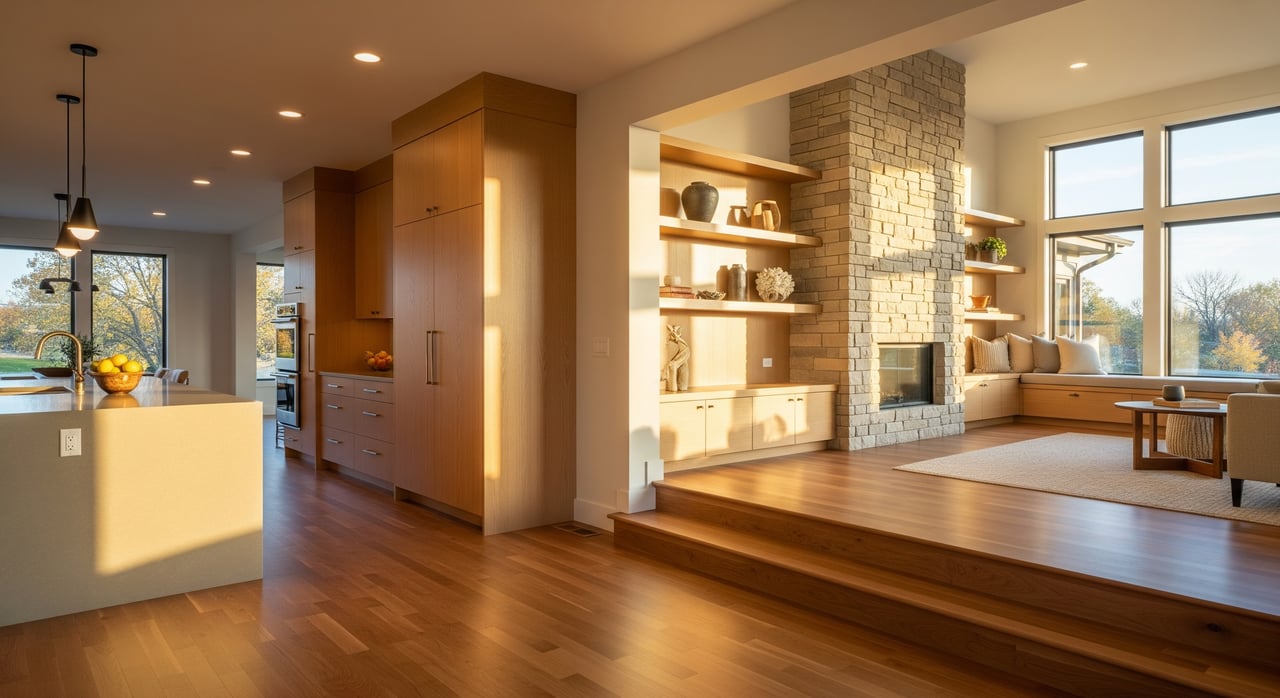
Thinking about buying or selling in Bloomington and torn between a ranch and a split-level? Your choice affects daily living, renovation plans, and resale value. With many homes built in the 1950s to 1970s, you’ll see both layouts across the city, each drawing different buyers. In this guide, you’ll learn how the two styles live, which projects matter most in our cold-climate market, and how to position your home for a strong sale. Let’s dive in.
Bloomington’s ranch and split-level basics
What is a ranch home
A ranch is a single-story home with all main living spaces on one level above grade. Many have an attached garage and a full basement below. Bedrooms often sit on one side of the home with living, dining, and kitchen on the other. Some older ranches feel more compartmentalized, while later versions lean more open.
What is a split-level
A split-level uses short stair runs to separate spaces. Common versions include a tri-level with an entry landing and stairs up to main living and down to additional living or bedroom space. A split-entry (bi-level) places the entry at a mid-level with the lower level partially below grade. The result is clear zones for living, sleeping, and recreation within a compact footprint.
Where you’ll find them in Bloomington
Bloomington saw major building waves from the postwar years through the 1970s, so both styles show up in many neighborhoods. You’ll encounter a mix in mid-century areas, including older parts near Old Cedar, around Normandale, and in West Bloomington. Local appraisers and agents consider both types common within the Twin Cities suburbs.
Who each style attracts
Single-level living is a big draw for buyers who want accessibility or plan to age in place. Families often like split-levels because they can get more separation of space and a perception of more square footage without a larger footprint. Preferences shift by neighborhood and price point. Some buyers pay a premium for a well-done open ranch, while others want the most bedrooms and finished space for the money.
Liveability: stairs, flow, and usable area
Stairs and everyday flow
If you want minimal stairs, a ranch is hard to beat. It makes daily living and hosting simpler, and it appeals to those avoiding interior steps. A split-level adds short stair runs that separate activities. That can help with noise and privacy, but it may not suit buyers who prefer single-level convenience.
Bedrooms, privacy, and layout
Ranches often place bedrooms on one side with shared living on the other. Openness depends on whether walls have been removed over time. Split-levels can tuck bedrooms either one level up or down, shaping distinct zones for sleep, play, or work. If you need defined spaces, a split-level delivers that feeling within a compact plan.
Basements and functional space
In Bloomington, usable heated space matters. Many ranches sit over full basements, which are great candidates for legal bedrooms and recreation areas if egress, ceiling height, and moisture control are addressed. Split-level lower levels often sit partially below grade and can also be finished into high-value living space. In both cases, egress and moisture history determine how appraisers and buyers treat the space.
Renovations that add value here
High-impact interior projects
Well-scoped interior updates tend to deliver the best resale results when they add or improve functional living area.
- Kitchen updates: modern cabinetry, counters, appliances, lighting, and a smart layout. Match the scope to neighborhood comps to avoid over-improving.
- Bathroom updates: refresh full baths and consider adding a second bath or converting a half bath to a full where feasible.
- Finish or improve the basement: add legal bedrooms with egress windows, a full bathroom, and comfortable living space. Confirm egress, ceiling height, and permits before claiming additional bedrooms.
- Create selective openness: opening the kitchen to living/dining works well. Avoid removing a bedroom if it reduces the bed count below neighborhood norms.
Systems and energy performance in a cold climate
Energy and mechanical upgrades matter in Bloomington and can strengthen buyer confidence.
- Insulation, air sealing, and HVAC: replace an aging furnace, add central AC, improve insulation and air sealing, and install modern thermostats. These reduce operating costs and stress for buyers.
- Windows and siding: replacement windows and refreshed siding, soffits, and trim improve curb appeal and comfort.
- Roof condition: a sound roof is a baseline expectation for most buyers.
- Radon: Minnesota has known radon risk. Test and mitigate if needed, especially before finishing a basement or listing.
Structural changes with variable ROI
Bigger layout changes can help certain buyers but come with higher costs.
- Primary suite additions or bump-outs: desirable but dependent on neighborhood price ceilings.
- Opening a split-level or relocating stairs: can modernize flow but often requires structural work. Make sure the budget aligns with likely resale gains.
Permits, radon, and moisture: do your homework
Permits and records to verify
Before you list or buy, check the City of Bloomington permit history and Hennepin County property records. Most additions, structural changes, finished basements that add bedrooms, and major electrical, plumbing, HVAC, or egress work require permits. Unpermitted work can complicate a sale. Confirm past remodels or plan to address gaps.
Radon and basement moisture
Test for radon and review mitigation options where needed. Assess basements for signs of water intrusion, including sump pump setup, perimeter drains, grading, and prior repairs. In a climate with freeze-thaw cycles and seasonal groundwater, clear documentation of dry, well-managed basements reassures buyers and protects value.
Resale outlook in Bloomington
Which layout resells better
There is no universal winner. In areas with many downsizers or accessibility-focused buyers, well-presented ranches often command stronger attention. In family-oriented segments, split-levels can deliver more bedrooms and finished space at a lower price per square foot. The most reliable indicator is recent comparable sales for the same layout and finished square footage in your immediate neighborhood.
Pricing and timing strategy
Price to the strongest relevant comps and invest where it moves you into a better comp set. For quicker sales, focus on projects that reduce buyer risk: mechanicals, roof, radon mitigation, and moisture control. Then polish presentation with paint, lighting, flooring updates, and landscape cleanup. Make recent service receipts easy to review so buyers see the home is well cared for.
Common objections and how to handle them
- Too many stairs in a split-level: highlight handrails, open sightlines, and zoned living benefits. Market to buyers who want separation of space.
- Low basement ceilings or small windows: add or highlight egress windows, improve lighting, and confirm compliant ceiling height where claiming bedrooms.
- Dated mid-century finishes: targeted cosmetic updates often deliver an outsized boost in photos and showings.
Ranch vs split-level: quick compare
| Feature | Ranch | Split-Level |
|---|---|---|
| Stairs | Single-story living | Short flights between zones |
| Flow | Simple daily circulation | Distinct living, sleeping, rec zones |
| Basement potential | Full basements common; strong finishing potential | Lower level often partially below grade; strong finishing potential |
| Buyer appeal | Downsizers, accessibility-minded buyers | Families seeking separation and value |
| Renovation focus | Open the main level, kitchen/bath, energy upgrades | Kitchen/bath, finish lower level, consider selective openness |
| Resale nuance | Can command premiums in accessibility-focused areas | Often more bedrooms per dollar; price-sensitive value |
Action steps for sellers and buyers
If you’re selling
- Pull your Hennepin County property record and City of Bloomington permit history.
- Consider a pre-listing inspection, radon test, and basement moisture check.
- Tackle mechanical and safety items first: furnace, roof, electrical, water intrusion, and radon.
- Decide where to invest vs. price accordingly. Midrange kitchen/bath updates and properly finished basements are common winners.
- Stage main living spaces and clearly market single-level living or finished lower-level benefits.
If you’re buying
- Decide what matters most: single-level living or maximum bedrooms and separation of space.
- Ask for permit history and documentation on improvements.
- Include a thorough inspection: structure, moisture, radon, HVAC, insulation, and windows.
- Verify basement egress and legal bedroom status if you plan to count rooms in the future.
- Compare recent sold comps for the same layout in the same neighborhood to set expectations and inform offers.
What to improve first in Bloomington
When budgets are tight, sequence projects by buyer impact and risk reduction.
- Address mechanical and safety items: furnace, roof, radon mitigation, electrical updates, and water intrusion fixes.
- Finish the basement correctly: legal egress, adequate headroom, and a well-finished bath and living area.
- Refresh kitchen and primary bath at a midrange level.
- Boost curb appeal: siding repairs, paint, and clean landscaping.
- Improve energy performance: windows, insulation, and programmable HVAC controls.
This order balances cost, confidence, and our climate’s priorities.
Ready to decide between ranch and split-level?
Both styles can win in Bloomington when they are permitted, dry, energy-smart, and well presented. If you want single-level ease, a ranch with a finished, legal basement is a strong bet. If you want maximum space and separation on a budget, a split-level with a bright lower level checks a lot of boxes. Need help picking the right path or planning improvements for resale? Reach out to Isaac Kuehn for local guidance and a tailored plan.
FAQs
Does a finished basement add value in Bloomington?
- Yes. Properly finished, dry basement space with legal egress and adequate ceiling height typically increases marketable living area, though treatment versus above-grade space varies by appraiser and comps.
Are ranches easier to sell than split-levels in Bloomington?
- It depends on buyer mix and neighborhood. Ranches often attract buyers seeking single-level living, while split-levels draw families wanting separation and value. Use recent local comps to decide.
Which home projects have the best ROI locally?
- Midrange kitchen and bath updates, properly finished basements, and mechanical and energy improvements tend to be most impactful in our climate. Exact results depend on costs and neighborhood comps.
Do you need permits to finish a basement or add bedrooms in Bloomington?
- Most structural, electrical, plumbing, HVAC, and egress work requires City of Bloomington permits. Verify permit status for past work, and confirm requirements before starting new projects.